Flat Headed Cat Facts
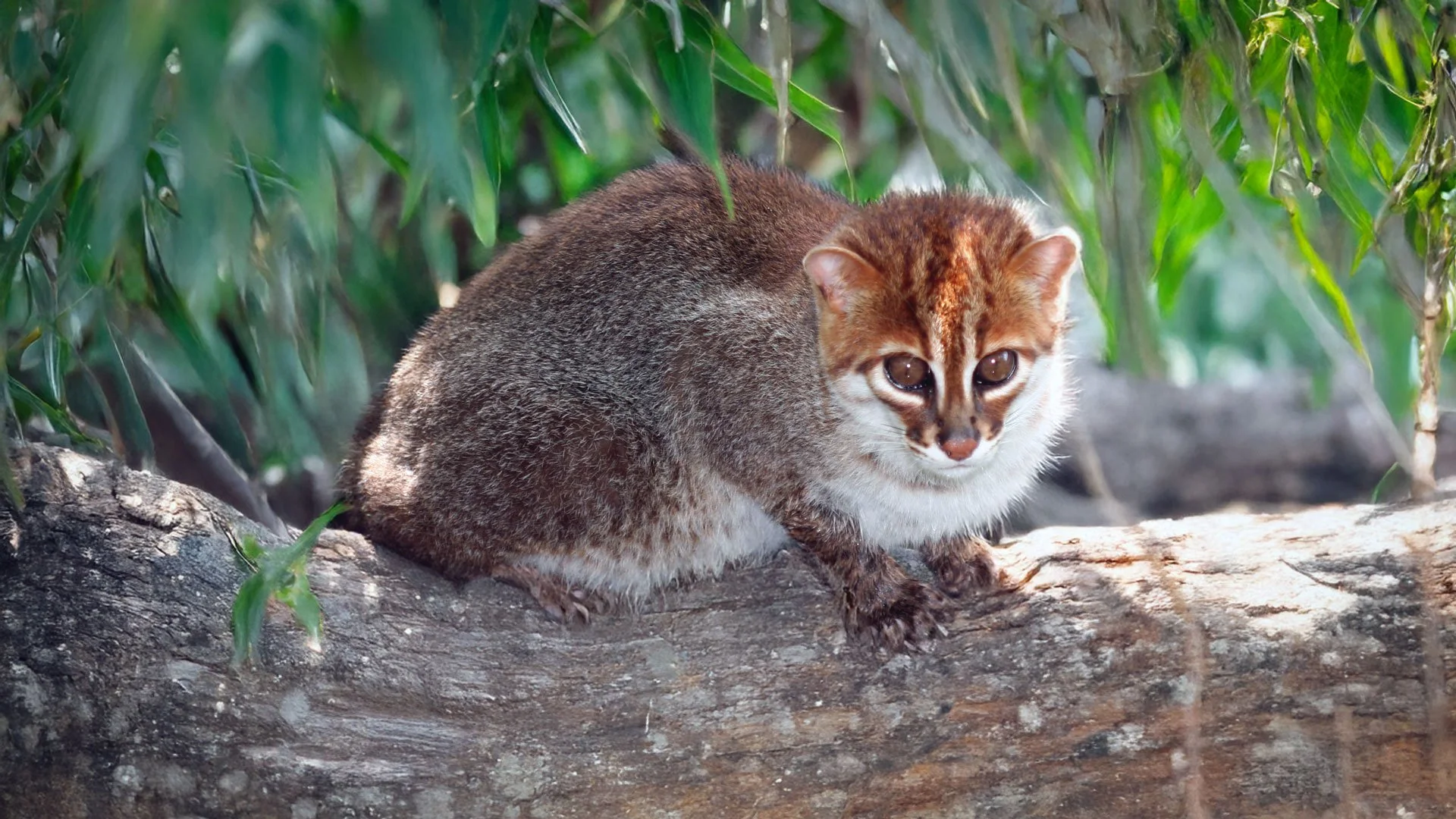
Flat Headed Cat photo by Dr Jim Sanderson AI background

Quick Facts
Common Name: Flat-headed cat
Scientific Name: Prionailurus planiceps
Conservation Status: Endangered (IUCN Red List)
Current Population: Estimated at fewer than 2,500 mature individuals, with a declining trend.
Weight: 3 to 5.5 pounds (1.5 to 2.5 kg).
Lifespan: Up to 14 years in captivity; unknown in the wild.
Appearance
The flat-headed cat is one of the most specialized and unique members of the felid family, evolved specifically for a semi-aquatic lifestyle. As its name suggests, it possesses a long, sloping snout and a notably flattened skull with small, low-set ears. Its large, closely set eyes provide exceptional binocular vision, which is essential for hunting in water.
Its physical adaptations are striking: the cat’s feet are more significantly webbed than those of the fishing cat, and its pads are long and narrow. Unlike most felines, its claws are only partially retractile, remaining visible even when not in use. Its dental structure is also unique, featuring molars that are larger and sharper than those of its relatives, specifically designed to grip slippery prey like fish and frogs. The coat is thick and soft, colored a reddish-brown on the head and transitions to a dark, grizzled brown on the body with silver-gray tipping, ending in a remarkably short tail.
Habitat and Range

The flat-headed cat is restricted to Southeast Asia, where it is primarily found in the tropical lowlands of Sumatra, Borneo, and Peninsular Malaysia. While older records suggested a presence in Thailand and Singapore, current scientific data indicates the species is likely extirpated (locally extinct) in Singapore and Thailand, and its presence in Myanmar remains unconfirmed.
This species is strictly tied to freshwater habitats. They are almost exclusively found in lowland tropical rainforests, swampy areas, and riverine forests. Research suggests they are rarely found more than three kilometers (roughly two miles) away from a water source.
Diet and Behavior
Often described as having "raccoon-like" qualities, the flat-headed cat has been observed in captivity washing objects and food in water. They are highly proficient hunters that show no hesitation in fully submerging their heads to capture prey. Their diet consists almost entirely of aquatic life, including fish, frogs, and crustaceans like shrimp.
While they are primarily nocturnal or crepuscular, they are frequently spotted hunting along muddy riverbanks. Their specialized teeth and semi-retractable claws allow them to effectively "hook" and hold onto wet, moving prey that other cats might struggle to secure.
Reproduction
Due to their elusive nature, much of what we know about their reproduction comes from captive individuals. Following a gestation period of approximately 56 days, females typically give birth to a litter of one to four kittens. In a managed environment, these cats have been known to live up to 14 years, though their longevity and reproductive cycles in the wild require further study.
Threats
The survival of the flat-headed cat is under severe pressure from human activity. The primary threat is the massive destruction of lowland wetlands and forests, which are frequently drained and cleared to make way for human settlements and commercial oil palm plantations.
Additionally, water pollution is a critical concern. As a specialized fish-eater, the cat is highly susceptible to the contamination of its prey base by agricultural runoff and industrial waste. Because their habitat is so restricted to narrow riverine strips, even localized development can completely isolate or eliminate a population.
Conservation Efforts

The flat-headed cat is protected under CITES Appendix I, which prohibits international trade of the species. Conservation efforts are currently focused on protecting the remaining lowland peat swamp forests of Southeast Asia.
Big Cat Rescue actively supports these efforts by providing funding for in-situ conservation projects. This funding is directed toward protecting wild cats in their natural habitats, supporting the researchers and field teams working to preserve the fragile ecosystems that this unique, water-loving cat calls home.
Analogy for Understanding: Think of the flat-headed cat as the specialized "otter" of the cat world. Just as a specialized tool is perfect for one specific job but breaks if the workspace is destroyed, this cat is perfectly engineered for life on the riverbank. When those riverbanks are polluted or turned into plantations, the cat has nowhere else to go.
