Margay Facts

Quick Facts
Common Name: Margay
Kingdom: Animalia
Phylum: Chordata (Vertebrata)
Class: Mammalia
Order: Carnivora
Family: Felidae
Genus: Felinae (Leopardus)
Species: wiedii
Scientific Name: Leopardus wiedii
Conservation Status: Near Threatened (Population decreasing)
Lifespan: Up to 20 years in captivity
Weight: Approximately 9 to 20 pounds
Body Length: 34 to 52 inches
Key Feature: Only feline capable of rotating its hind ankles 180 degrees to climb down trees head-first.
Appearance
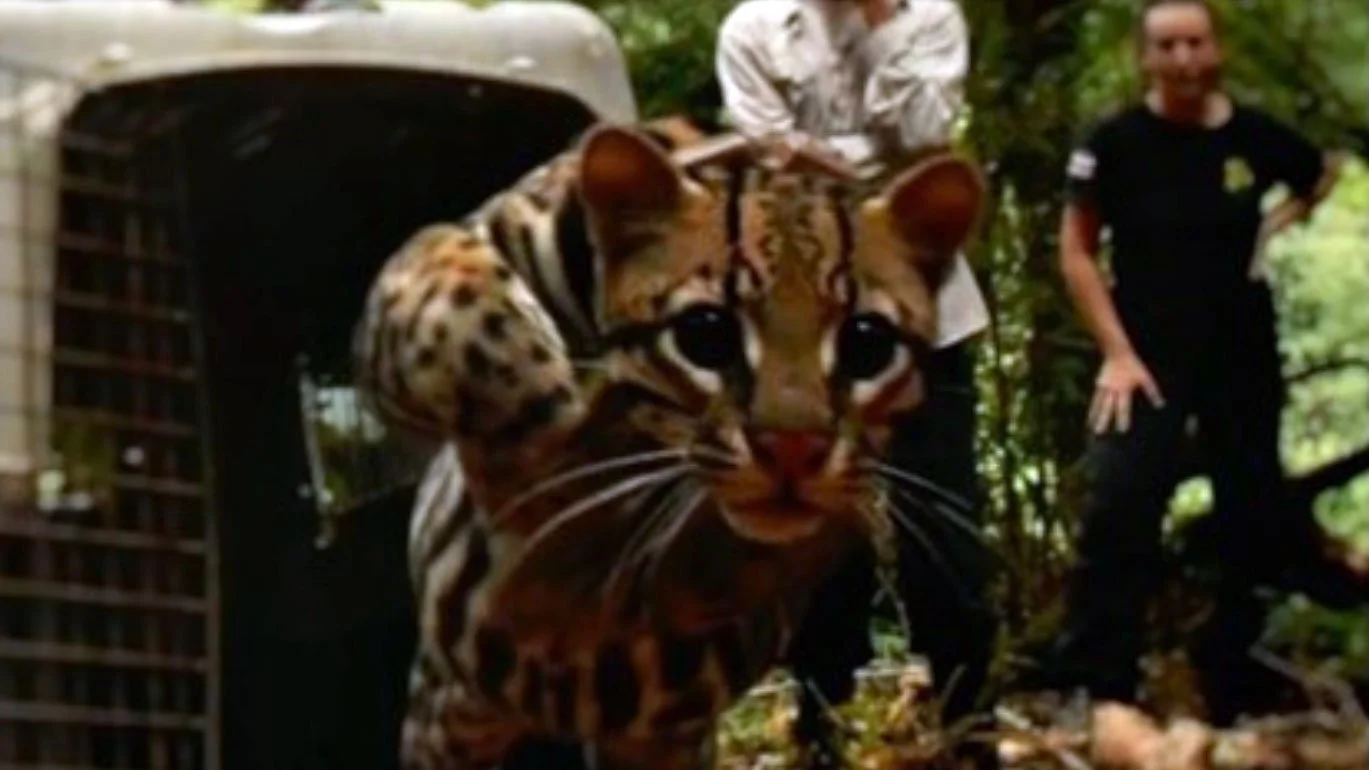
The Margay is a small, exquisitely patterned cat often mistaken for its relatives, the Ocelot and the Oncilla. It features a plush, tawny coat decorated with dark-ringed rosettes and elongated spots. To navigate its world among the branches, the Margay possesses unique physical adaptations: its exceptionally large eyes provide superior nocturnal vision, and its tail—which accounts for roughly 70% of its body length—acts as a vital counterweight for balance. Most notably, its specialized ankle joints allow it to mimic the agility of a squirrel, enabling it to descend vertical trunks head-first or even hang from a single hind foot.
Habitat and Range

While the Margay’s range is vast—stretching from the tropical lowlands of Mexico through Central and South America to northern Uruguay and Argentina—its actual occupied territory is much smaller than its distribution suggests. These cats are strictly tied to areas with significant tree cover, including evergreen and deciduous forests, and occasionally shady coffee or cocoa plantations.
In the United States, they were once found in Texas but are now considered extirpated, with their current presence there marked as uncertain. In South America, the Amazon Basin remains a stronghold for the species, though even there they are considered uncommon. Interestingly, their presence is heavily influenced by the "ocelot effect"; because Ocelots are dominant competitors, Margay populations are typically much lower in areas where Ocelot densities are high.
Diet and Behavior
The Margay is a nocturnal and crepuscular hunter, most active during the twilight and night hours. Although it is the most arboreal of all cats and spends a great deal of time resting in the canopy, modern research indicates that it performs the majority of its hunting on the ground.
Its diet is diverse, consisting primarily of small terrestrial and tree-dwelling mammals such as climbing rats, squirrels, opossums, and marmosets. They are also known to consume birds, lizards, and occasionally fruit. Despite their legendary climbing skills, they are solitary travelers that navigate a home range that can vary from 1 to 20 square kilometers depending on the quality of the habitat.
Reproduction
Margays have one of the lowest reproductive rates among small felids, making their recovery from population declines particularly difficult. Females typically give birth to only one kitten (rarely two) every two years. The gestation period lasts between 76 and 84 days. Kittens are born weighing only a few ounces and begin to open their eyes at two weeks of age. They are weaned by two months, and while they reach sexual maturity relatively early, their slow natural birth rate combined with a high kitten mortality rate in the wild poses a significant challenge for the species' survival.
Threats
Historically, the Margay was a primary target for the international fur trade, with tens of thousands of pelts harvested annually. While international trade is now prohibited under CITES Appendix I, the species faces modern crises:

Habitat Fragmentation: The conversion of native forests into agricultural land, pastures, and infrastructure like hydroelectric dams is the leading threat to their survival.
The "Ocelot Effect": Higher densities of Ocelots in protected areas often push Margays into unprotected, more dangerous territories.
Human Conflict: Margays are sometimes killed in retaliation for preying on domestic poultry.
Illegal Trade: They are still occasionally targeted for the underground skin market or captured for the illegal pet trade.
Infrastructure: Roads and highways fragment their habitat further, leading to increased mortality from vehicle strikes.
Conservation Efforts
The Margay is legally protected across nearly all of its range, with hunting and trade strictly forbidden in countries such as Brazil, Argentina, Mexico, and Colombia. Because they struggle to thrive in small, isolated protected areas where ocelots dominate, current conservation strategies are shifting to focus on protecting wildlife corridors outside of traditional reserves.
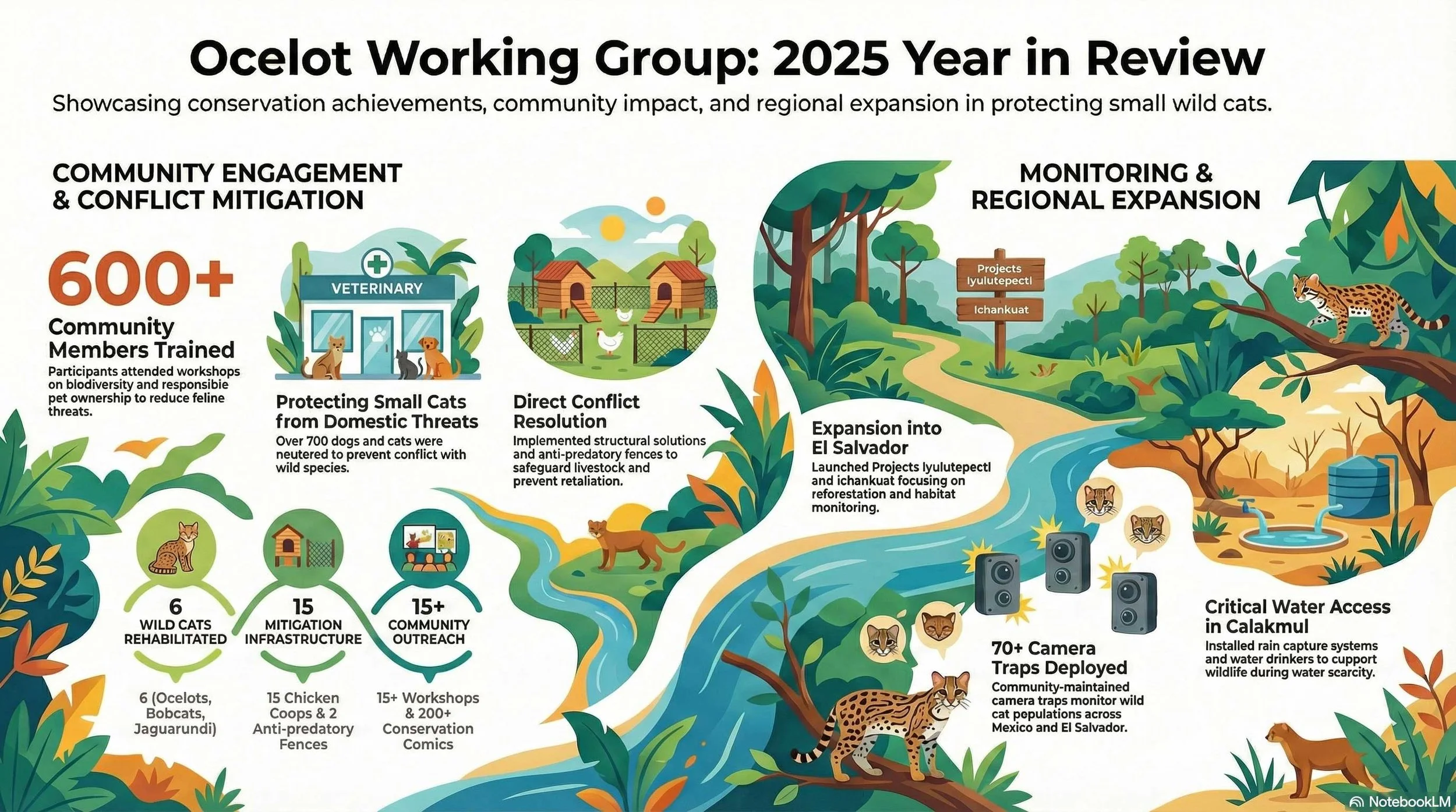
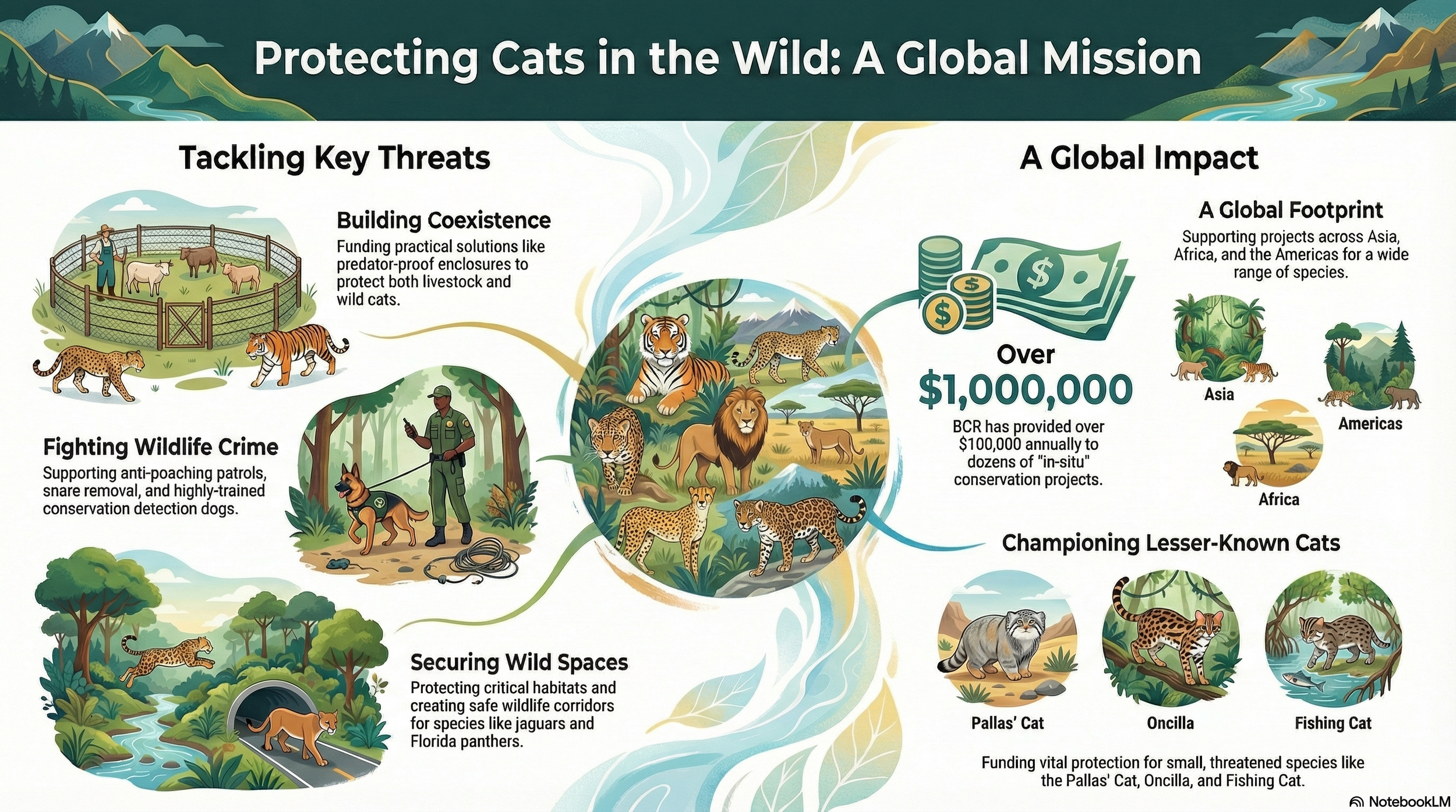
Big Cat Rescue has been an active supporter of in-situ conservation projects that benefit the Margay and its habitat. Through the Small Wild Cat Conservation Foundation (SWCCF), funding has supported vital research and protection efforts across Mesoamerica and the Amazon. This work includes initiatives like "Wires Through the Wild" in Costa Rica, which addresses the balance between progress and protection, and projects in the Amazon aimed at preventing the rainforest from reaching a tipping point. By funding studies on demographics and the impact of ranching and deforestation, Big Cat Rescue helps ensure that this unique "tree ocelot" has a future in the wild.
See Conservation Work Funded By Big Cat Rescue here:
All conservation insitu work: https://bigcatrescue.org/insitu/